Cities across America have found a quiet way to silence Christian street preachers.
Arrest them once, let the conviction stick, then use it as a permanent legal shield against any future challenge.
The Supreme Court just took that weapon away – and not one justice disagreed.
The Trap Brandon Built for Gabriel Olivier
Gabriel Olivier had been preaching near the Brandon Amphitheater for years, sharing the Gospel with concertgoers as they arrived for events.
In 2019, Brandon officials passed an ordinance requiring anyone engaged in "protests" or "demonstrations" to stay inside a designated area during events.
The zone sat 265 feet from the action.
Loudspeakers were banned beyond 100 feet.
Signs had to be handheld – regardless of message.
Olivier checked out the zone and understood immediately what the city already knew: nobody there could hear him.
In May 2021, as fans arrived for a Lee Brice country concert, he walked back to the sidewalk fronting the amphitheater with his signs and loudspeaker.
Brandon's police chief arrested him on the spot.
He pleaded no contest, paid a $304 fine, and served one year of probation.
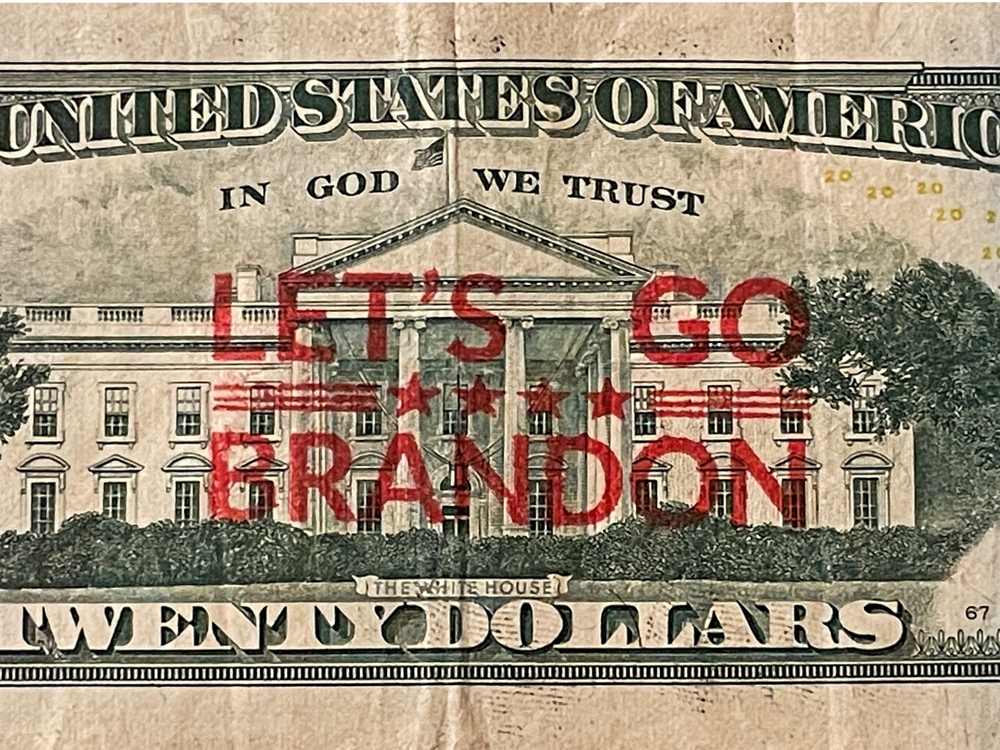
The irony isn’t lost that this happened in the City of Brandon – not when you think President “Let’s Go Brandon” – or whoever was really in charge in the Biden White House – weaponized the government against Christians.
https://twitter.com/imUrB00gieman/status/1456712319740694529
The Legal Trap Was the Real Trap
Olivier didn't want to sue over what had already happened.
He wanted to go back – to return to that sidewalk and preach again – without getting arrested a second time.
So he filed a federal civil rights lawsuit under Section 1983 of the U.S. Code, asking a court to declare the ordinance unconstitutional and block future enforcement.
Brandon had an answer for that, too.
The city pointed to Heck v. Humphrey – a 1994 Supreme Court ruling that bars people convicted of a crime from filing civil lawsuits that would effectively undermine that conviction.
Since Olivier had already been convicted under the ordinance, Brandon argued, any lawsuit challenging it would "necessarily imply" his conviction was invalid.
Both the federal district court and the Fifth Circuit agreed.
Eight Fifth Circuit judges dissented – but they were outnumbered.
Olivier's only move was the Supreme Court.
Nine to Zero
All nine justices sided with Olivier.
Justice Elena Kagan wrote the unanimous opinion reversing the Fifth Circuit.
The key distinction: Olivier wasn't asking for money damages tied to his old conviction, trying to wipe his record clean, or challenging anything that had already happened.
He simply wanted to return to that sidewalk without being arrested again.
"Given that Olivier asked for only a forward-looking remedy – an injunction stopping officials from enforcing the city ordinance in the future – his suit can proceed, notwithstanding his prior conviction," Kagan wrote.
The court drew a direct line to Wooley v. Maynard – a 1977 ruling in which a New Hampshire man convicted for covering his state's "Live Free or Die" license plate motto was allowed to challenge the underlying law in federal court.
The principle was identical: a citizen forced to choose between breaking the law and surrendering constitutionally protected speech deserves a day in court.
What Cities Have Been Getting Away With
This case exposes a playbook cities have used for decades.
Pass a "time, place, and manner" ordinance that looks neutral on its face.
Designate a protest zone so remote that expressive activity is functionally silenced – in Brandon's case, 265 feet away with loudspeakers banned beyond 100 feet.
Arrest anyone who refuses to comply.
Then use the resulting conviction as a permanent shield against future legal challenges.
Brandon's strategy was to make the legal process the punishment: convict Olivier once, and he could never sue to protect his right to come back.
The Supreme Court just closed that trap.
First Liberty Institute, the conservative religious liberty organization that represented Olivier, called it a landmark moment for every American who has ever been arrested for speech the government found inconvenient.
"This is not only a win for the right to share your faith in public, but also a win for every American's right to have their day in court when their First Amendment rights are violated," said First Liberty CEO Kelly Shackelford.
The ruling doesn't automatically strike down Brandon's ordinance – Olivier still has to return to district court and prove the ordinance itself violates the First Amendment.
But he gets that fight now.
And every city that thought a single arrest could silence a believer for good just learned the Supreme Court disagrees.
Sources:
- Katelynn Richardson, "Supreme Court Greenlights Street Preacher's Free Speech Challenge," Daily Caller News Foundation, March 20, 2026.
- Olivier v. City of Brandon, Mississippi, No. 24-993, Supreme Court of the United States, March 20, 2026.
- Kelsey Dallas, "Unanimous Court Allows Street Preacher's Free Speech Case to Move Forward," SCOTUSblog, March 20, 2026.
- "9-0: Supreme Court Sides With Street Preacher's Right to Sue Over City's Speech Restriction," The Daily Signal, March 20, 2026.
- First Liberty Institute, "Gabriel Olivier – Cases," firstliberty.org, March 2026.