Democrats spent years building a system to backstop their infamous “Red Mirage Blue Shift” claim ahead of Election Day 2020.
The Supreme Court seems to have just run out of patience for that system and the conservative majority is signaling it may be done letting them get away with it.
What happened inside that courtroom could shut down one of the left's most reliable ballot-harvesting tricks before November.
The Case That Could Rewrite Election Night
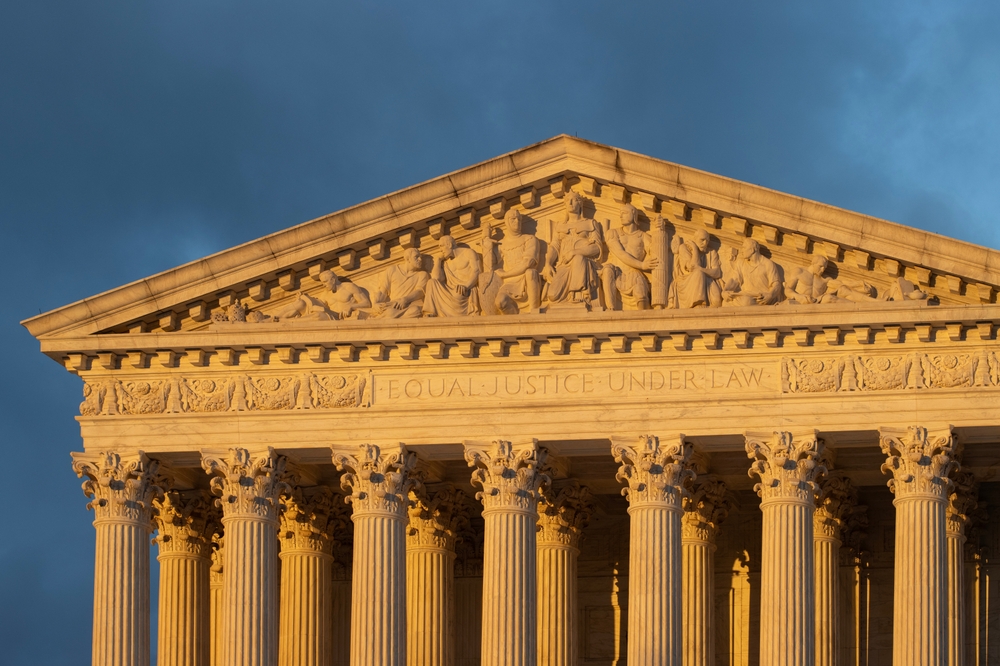
The Supreme Court heard two hours of arguments Monday in Watson v. Republican National Committee – a case challenging Mississippi's law allowing mail-in ballots to arrive up to five days after Election Day, so long as they carry an Election Day postmark.
Fourteen states, the District of Columbia, and three U.S. territories currently allow these late-arriving ballots.
The Republican National Committee sued, arguing a federal law dating to 1845 means exactly what it says: Election Day is the deadline – not a suggestion, not a starting point for a five-day grace period.
The Trump administration stood with the RNC.
Solicitor General D. John Sauer told the justices that federal law requires ballots to be received by Election Day and that allowing states to keep stretching that deadline damages the public trust honest elections depend on.
Alito Demolishes the Other Side in One Sentence
Justice Samuel Alito wasn't buying what Mississippi's lawyers were selling.
He ticked off a list – Labor Day, Memorial Day, Independence Day – and delivered the point that flattened the other side: "They are all particular days."
"So if we start with that, if I have nothing more to look at than the phrase 'Election Day,'" he added, "I think this is the day in which everything is going to take place, or almost everything."
Justice Brett Kavanaugh landed the blow that every conservative in America has been waiting to hear out loud.
"If the apparent winner the morning after the election ends up losing due to late arriving ballots, charges of a rigged election could explode," Kavanaugh said.
He then turned directly to Mississippi's solicitor general: "Is that a real concern? Is that something we should be thinking about – confidence in the election process?"
Those weren't hypothetical questions.
Every conservative who watched the chaos of 2020 – nights of Trump leads evaporating as mail ballots rolled in after Election Day – knows Kavanaugh was speaking from memory.
Justice Neil Gorsuch raised the slippery slope no one defending Mississippi could answer: what stops a state from pushing deadlines further and further if the court sides with them?
"If history teaches anything," Gorsuch warned, "as soon as anything is allowed, it will happen."
What Happened in 2020 Is Why This Case Exists
Pennsylvania didn't call its winner for four full days after Election Day in 2020.
Mail ballots kept arriving and flipping the count as lawyers swarmed counting centers and protesters demanded the counting stop.
That dragged-out result – built into the system by a state legislature that refused to establish clear deadlines – lit the fuse on every crisis of confidence that followed.
The 5th Circuit Court of Appeals already ruled in the RNC's favor, finding that Mississippi's grace period conflicts with federal law.
Mississippi appealed to the Supreme Court, which agreed to take the case.
The Ruling Could Come Before the Midterms
A decision is expected by late June – months before the November midterms that will determine control of Congress.
If the conservative majority rules for the RNC, all 14 states with post-Election Day receipt windows would have to comply before election season begins.
RNC Election Integrity communications director Ally Triolo put the principle plainly: "Watson v. RNC is about a simple principle: ballots must be received by Election Day. This prevents elections from dragging on for days and weeks after voters have cast their ballots, causing confusion and undermining our elections."
Democrats Built a System Designed to Drag Out Results
The late-ballot fight was never about soldiers overseas – they already have separate federal protections.
This was about manufacturing opportunities in close races: extra days of counting, shifting results, and collapsing public trust while lawyers flooded every counting room in America.
https://twitter.com/WallStreetApes/status/2001010151504085098
Democrats built that system during Covid and never gave it back.
Now five conservative justices appear ready to take it away.
Alito, Thomas, Kavanaugh, and Gorsuch all pressed Mississippi's lawyers hard without getting answers that held up.
"Finality should take place on Election Day," RNC attorney Paul Clement told the court.
That's not a legal technicality.
That's the basic bargain Americans thought they had – until 2020 proved they didn't.
Sources:
- Breanne Deppisch, "Supreme Court hears high-stakes mail-in ballot case months before Election Day," Fox News, March 23, 2026.
- Amy Howe, "Court appears ready to overturn state law allowing for late-arriving mail-in ballots," SCOTUSblog, March 23, 2026.
- "Supreme Court grapples with laws allowing mail ballots that arrive after Election Day to be counted," CBS News, March 23, 2026.
- Shawn Fleetwood, "Supreme Court Voices Skepticism About States Accepting Mail-In Ballots After Election Day," The Federalist, March 24, 2026.