Blue state attorneys general promised to bury Trump's election order in court.
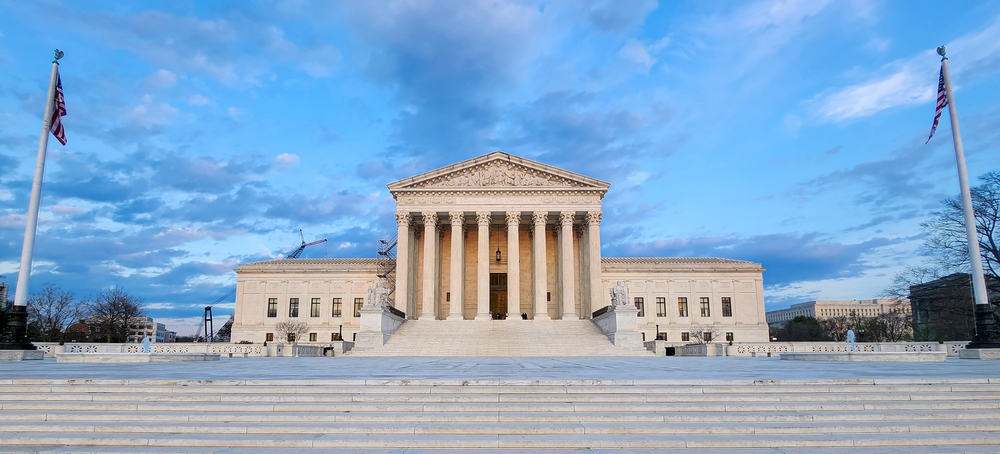
The Supreme Court just told them they filed too soon and for the wrong reason.
Now watch what happens the moment USPS and DHS actually pull the trigger.
Supreme Court Rejects the "Future Harm" Fantasy
Rob Bonta and Josh Shapiro built their entire case on a hypothetical.
They told a Boston federal judge that Trump's mail-in ballot order would someday hurt voters – and that was enough to freeze it in place.
The Supreme Court said no.
Former White House deputy counsel Gene Hamilton put it in plain terms: the justices basically told the states "you can't enjoin the feds from thinking."
No action had happened yet. No harm had occurred yet. So there was nothing to sue over yet.
That single distinction – speculation versus actual injury – gutted the entire liberal legal strategy against election integrity reform in one ruling.
What Federal Agencies Can Now Actually Do
USPS can move forward on standardized ballot envelopes and tracking barcodes. DHS can compile citizenship data for states to cross-check against voter rolls. DOJ can prioritize prosecutions of ballots sent to ineligible voters.
Not one of those actions stops a single eligible American from voting. It stops a ballot from landing in the mailbox of someone who shouldn't have gotten one.
Hamilton laid out exactly why the lower court's block was absurd on its face. The Boston judge effectively ruled that states get to dictate which cases the Attorney General and DOJ are allowed to pursue. That's not how Article III works, and the Supreme Court said so.
Hamilton didn't hide his amusement at what the losing side's own logic would mean if applied consistently. If "possible future harm" were enough to freeze federal action, his side could tie up half the government's agenda in court by predicting bad outcomes before anything happens. He said his side would "have a field day" doing exactly that.
Democrats never once considered applying that standard to themselves.
Bonta and Shapiro Are Still Pretending They Won Something
Rob Bonta – who is eyeing a bigger political future and needed this fight – came out swinging anyway. He claimed Trump was trying to "make it harder for Americans to vote."
Josh Shapiro, weighing a 2028 run of his own, insisted "Donald Trump does not run elections here in Pennsylvania." Cute line. Legally meaningless after Monday.
Arizona's Kris Mayes went further, vowing the rule would go into effect "over my dead body."
None of them addressed the actual ruling. They addressed the ruling they wish had happened.
That's not a legal strategy. That's a press release dressed up as one.
Why This Fight Isn't Over, and Why That's Fine
Hamilton was upfront that the fight continues. Blue states get another shot once agencies actually implement specific rules – but this time they need real evidence, not a scary prediction.
Sheriff Chad Bianco seized 650,000 California ballots last year to recount them by hand, and California's Attorney General called it a threat to public trust before a single box was opened.
USPS already finalized its ballot-mail rule requiring standardized envelopes and barcodes, and a separate injunction from a League of Women Voters lawsuit is currently keeping it frozen. That injunction is the next fight – and the next test of whether blue states can prove actual harm instead of just predicting it.
Good. Make them prove it.
Sources:
- Charles Creitz, "Mail-voting crackdown moves ahead as Trump court win opens door to federal action," Fox News, August 28, 2026.
- Fox News Staff, "Trump signs executive order overhauling mail-in voting in major election integrity push," Fox News, March 31, 2026.
- Fox News Staff, "California sheriff seizes 650,000 ballots in defiance of state officials over election count dispute," Fox News, 2026.
- CalMatters Staff, "California justices seem skeptical of Sheriff Chad Bianco's defense in ballot seizure case," CalMatters, August 2026.