Texas families froze in the dark for days in 2021 when one winter storm knocked out the power grid.
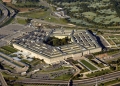
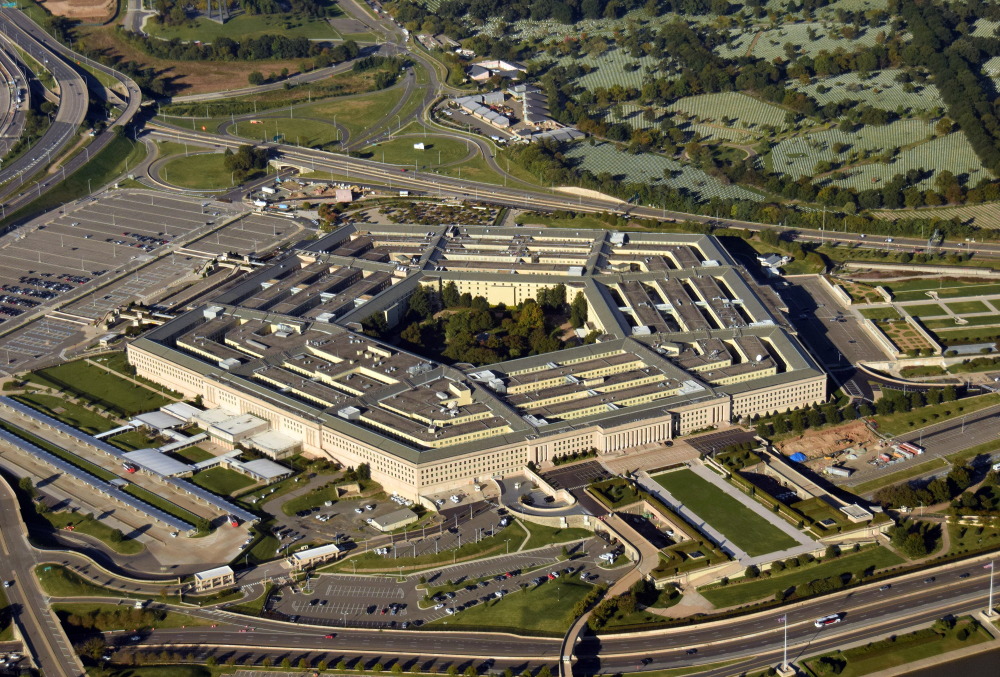
Now the Pentagon admits a war with Russia or China could do the exact same thing to its own military bases.
A blunt admission from inside the Department of War reveals exactly how exposed America's armed forces really are.
Pentagon Spokesman Says Military Cannot Trust the Civilian Grid
Fox News Digital reviewed internal documents laying out a new Pentagon initiative called FORTRESS.
The plan orders every major U.S. military base to run independently for 90 days straight.
No dependence on civilian power. No dependence on civilian water. No dependence on civilian fuel deliveries.
Pentagon chief spokesman Sean Parnell didn't dress it up.
"We don't want to rely on standard civilian municipal infrastructure to run our national defense," Parnell told Fox News Digital.
"We just simply can't. It's an intolerable risk."
Think about that sentence for a second.
The man running Pentagon communications just admitted the U.S. military cannot count on the American power grid to keep the lights on during a war.
That's not a hypothetical from some liberal think tank.
That's the Department of War, on the record, telling you the grid your family depends on is a weak link in national defense.
Decades of Democrat Neglect Left the Grid Wide Open
This didn't happen overnight.
For decades Washington poured money into green energy mandates while the actual backbone of the grid rotted.
Biden's Department of Energy spent years chasing climate targets instead of hardening transformers against attack.
Meanwhile China and Russia built weapons specifically designed to fry American electronics and knock out power on a continental scale.
Parnell laid out exactly why the old thinking failed.
"I realized that a lot of the way we think about homeland defense was built around the antiquated assumption that two oceans would protect us," Parnell said.
"President Trump understands that world is gone."
Trump's Pentagon isn't waiting around for Congress to fix the grid.
FORTRESS calls for portable nuclear microreactors, battery microgrids, and the ability to physically disconnect bases from the civilian grid entirely.
The Army already put real money behind it.
Back in August the Army committed $2 billion to build 20 nuclear microreactors across five bases by 2028, according to the Washington Times.
Westinghouse and BWXT are among the companies building them.
The Navy just picked a California firm for its own microreactor program, the Washington Times reported Oct. 22.
In February 2026, the Pentagon airlifted a microreactor into Utah aboard a C-17 – the first time that's ever been done, according to The Defense Post.
Supply Chains and Fuel Reserves Are Next
Power is only half the fight.
FORTRESS also orders the Pentagon to stockpile munitions, fuel, critical minerals, electronics, and medical supplies in case foreign supply chains collapse during a war.
"The next conflict will likely be fought on multiple fronts… when that happens, global supply chains will break," Parnell said.
The plan requires at least two separate supply sources for the military's most critical equipment.
One factory going down should never be able to shut down American defense production.
Picture it the other way around for a second.
One Chinese missile strike on one American factory, and suddenly your soldiers are waiting on parts that will never come.
That's the scenario Trump's Pentagon just made obsolete.
The Pentagon is also lining up civilian factories right now that could flip to weapons production the moment a crisis hits.
That's the Civil Reserve Manufacturing Network, and it's being built into FORTRESS from the ground up.
None of this existed under the last administration.
Trump Is Building the Backup Plan Biden Never Wanted
A Pentagon spokesman admitting on the record that the power grid is an intolerable risk is what actually fires me up about this story.
For years Democrats told you worrying about the power grid was fearmongering, a talking point for preppers and conspiracy theorists.
Now the Department of War itself is saying the quiet part out loud – the grid is an intolerable risk, and it's building around that risk as fast as it can.
Trump isn't hiding from the threat like the last administration did.
He's parking nuclear reactors on military bases, stockpiling fuel, and forcing factories to get ready for a war most Americans hope never comes.
That's not paranoia.
That's a commander in chief who understands that two oceans stopped protecting us a long time ago, and somebody finally said so out loud.
Sources:
- Morgan Phillips, "Inside the Pentagon's doomsday plan to keep America fighting if global war erupts," Fox News, October 25, 2026.
- "Pentagon's nuclear push expands; Navy picks Calif. firm to deliver cutting-edge microreactor," The Washington Times, October 22, 2026.
- "Army picks 5 companies to build, operate nuclear microreactors at military bases," The Washington Times, October 10, 2026.
- "Pentagon Airlifts Microreactor to Utah in First C-17 Nuclear Transport," The Defense Post, February 17, 2026.