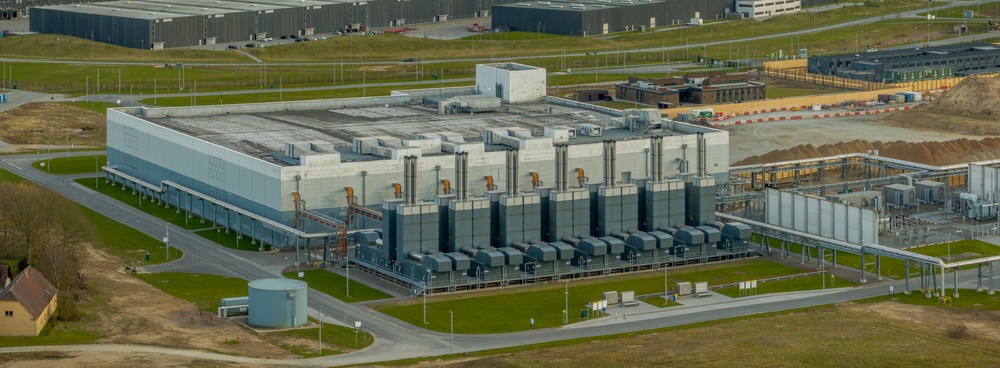
Virginia families watched their power bills double while AI data centers next door drained the grid.
Senate Republicans just forced Big Tech to start paying its own way on the power grid.
What happens next could finally end the free ride Big Tech has been getting on your electric bill.
Years of Left-Wing Stalling Finally Breaks
For three years, the hard left killed every serious attempt to fix America's broken permitting system, and they didn't need Republican help to do it.
Sen. Joe Manchin, a Democrat, tried first, back in 2022.
His own party's progressive wing helped bury him, with the vote dying 47 to 47 while green groups bragged they'd killed his "dirty deal."
Manchin tried again in 2023.
That attempt collapsed too, as Washington once again couldn't hold the votes together.
This week, Senate Republicans finally got something past that wall by building a coalition big enough to survive it.
The chamber advanced the Bipartisan American Affordability and Jobs Act on a lopsided bipartisan vote, with nearly every Republican and roughly half of Senate Democrats on board.
Oklahoma Sen. Alan Armstrong, who took over permitting reform as his signature issue after Markwayne Mullin left to run Homeland Security, says there's real support for it in the House.
But he's not popping champagne yet.
Armstrong told Fox News Digital he's not sure enough House Republicans will actually show up to vote.
The Fine Print Forces Data Centers to Pay Up
Here's the part your utility company has been hoping you wouldn't notice.
AI data centers have been quietly draining the grid and sticking regular families with the tab.
The numbers are staggering.
PJM's own market monitor ran the numbers and landed on a brutal total: data centers have drained roughly $29 billion out of 67 million ratepayers over just the last two years.
Carnegie Mellon researchers project electric bills will climb an average of 8 percent nationwide by 2030 thanks to the AI boom, with Virginia ratepayers facing the worst of it, a 25 percent spike worth roughly seventy bucks a month.
That's real money, gone, so Silicon Valley can run its chatbots.
Even New Mexico Democrat Martin Heinrich couldn't find a way to wreck this part of the bill.
He pushed language forcing any data center pulling at least 20 megawatts to cover its own costs, post financial guarantees, and cover the exit costs if it ever packs up and moves out, instead of leaving families stuck with the bill.
"Not a suggestion, an actual law," Heinrich said.
Even a broken clock is right twice a day.
Republicans already tried something similar earlier this year with a bill from Ohio Sen. Jon Husted.
That effort stalled too.
This time, it's actually moving.
This Still Has to Clear the House
The bill isn't law yet.
It has to pass the House, where Republicans already moved their own version called the SPEED Act.
Armstrong says much of what's in the Senate bill was lifted straight from what House Republicans already wrote, which should smooth the path.
Should.
Here's what fires me up about this one.
The same environmental groups who killed Manchin's bill in 2022 are already trying to kill this one too.
The Center for Biological Diversity called it an "environmental catastrophe" as the bill moved toward passage, and tribal nations are raising their own objections over consultation rules.
None of them lifted a finger while your electric bill was doubling because of AI data centers, and there's no reason to think that's about to change.
Watch what happens next.
If the House passes its companion bill and sends this to Trump's desk, you'll finally see Big Tech's name on its own power bill instead of yours.
Sources:
- Alex Miller, "Senate Republicans break through Washington gridlock with massive American energy, data center overhaul," Fox News, November 19, 2026.
- Sen. Joe Manchin, "Manchin Statement on Permitting Reform Vote," U.S. Senate Committee on Energy and Natural Resources, December 15, 2022.
- "Joe Manchin folds, resistance strips crowned energy," The Washington Times, September 27, 2022.
- "AI Data Centers: How Much Are Ratepayers on the Hook For?" NPR, October 1, 2026.
- Kristina Zagame, "You're Paying for AI on Your Electric Bills," EnergySage, January 30, 2026.