
Colonial Pipeline proved hackers can cripple fuel for half of America overnight.
Now hackers just did something scarier at hundreds of French supermarkets.
And the Pentagon still can't explain why its own freezers failed the exact same way.
Hundreds of French Supermarkets Got Cooked From a Laptop Somewhere Else
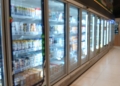
Hackers broke into refrigeration controllers at roughly 500 French grocery stores overnight.
They didn't need to touch a single building.
They forced freezer and fridge units to run defrost cycles nonstop until internal temperatures hit 122 degrees Fahrenheit.
Carrefour lost control at 80 stores.
Les Mousquetaires, the parent of Intermarché, watched temperatures sit at 122 degrees for six straight hours at roughly 150 locations.
Cooperative U, Monoprix, Spain, Portugal, Poland, Germany, and Belgium all got hit too.
Food spoiled by the ton.
Electrical fires broke out from overheating defrost elements.
The Paris prosecutor's office opened a criminal investigation and called it a "large-scale" attack.
Les Mousquetaires president Thierry Cotillard put the damage at "tens of millions of euros."
Cooperative U CEO Dominique Schelcher called it unacceptable.
Investigators traced the break in to Danfoss, the Danish company that builds the refrigeration brains running in supermarkets across the Western world.
Security researchers at Claroty had already flagged the vulnerability back in August, finding more than 2,700 of these Danfoss systems exposed to the open internet.
Danfoss says the compromised units were running outdated firmware and that it had long been urging customers to update.
Nobody updated them.
The Pentagon Had the Same Problem Two Months Earlier and Still Won't Talk
Here's the part the legacy press has barely mentioned.
Refrigeration systems at a dozen American military commissaries went dark in August, including bases at Fort Irwin, Fort Huachuca, Naval Station Newport, and Travis Air Force Base.
Both the Army and the Air Force say their criminal investigators are looking into it.
The Defense Department's official answer, two months later, is a single phrase.
A "possible refrigeration disruption."
Reporters asked the Pentagon for more. They got nothing back.
No cause, no culprit, no timeline.
Nobody has proven the two incidents are connected.
But Sweden's civil defense minister, Carl-Oskar Bohlin, told reporters this spring that Russian-linked hackers have changed tactics over the past year.
He said they're moving from nuisance denial of service attacks to deliberately destructive strikes on European infrastructure.
He pointed to one attempted sabotage of energy infrastructure that was caught before it worked last year.
Nobody in Paris or Washington has pointed a finger at anyone for the supermarket attack either.
That unanswered question should bother you more than the food that got thrown out.
Decades of Outsourced Infrastructure Built the Backdoor Hackers Just Walked Through
The thing that fires me up most about this story is that none of it had to happen.
For twenty years, Western governments let every piece of critical infrastructure get wired to the internet by the cheapest vendor with the weakest security.
Pipelines, power grids, even the refrigerator keeping your chicken cold.
Nobody in Brussels or the Biden White House treated that as a national security problem until the lights started going out.
Biden's own cybersecurity executive order leaned hard on digital identity mandates and federal pilot programs.
Trump tore it up in June, stripping out those identity schemes and pilot programs.
The White House's own fact sheet explaining the move said those mandates had "facilitated entitlement fraud" by foreign nationals.
He refocused federal cybersecurity on the basics: patch known vulnerabilities, secure the supply chain, stop pretending a glossy framework document protects a freezer running decade old firmware.
France just learned the hard way what happens when a government treats industrial hardware like it's invisible.
The Pentagon's silence about its own commissary meltdown says Washington hasn't fully learned that lesson either.
And somewhere in Moscow or Beijing, somebody is taking notes on exactly how much damage one unpatched refrigerator controller can do.
Sources:
- Leo Marchandon and Gabriel Stargardter, "Hackers heat French supermarket fridges, sparking fires and food losses," Reuters via Daily Caller, October 13, 2026.
- Daily Caller Staff, "Hundreds Of Supermarket Coolers Get Cooked By Hackers While Military Grocery Meltdown Remains A Cold Case," The Daily Caller, October 13, 2026.
- Staff, "Hackers Exploit Firmware Flaw to Heat Supermarket Fridges," itnews.com.au, October 2026.
- Staff, "Russia Ramps Up Destructive Cyberattacks on Europe, Says Sweden," ThreatBeat, April 16, 2026.
- Mayer Brown LLP, "President Trump Signs Cybersecurity Executive Order," Mayer Brown Insights, June 2025.