
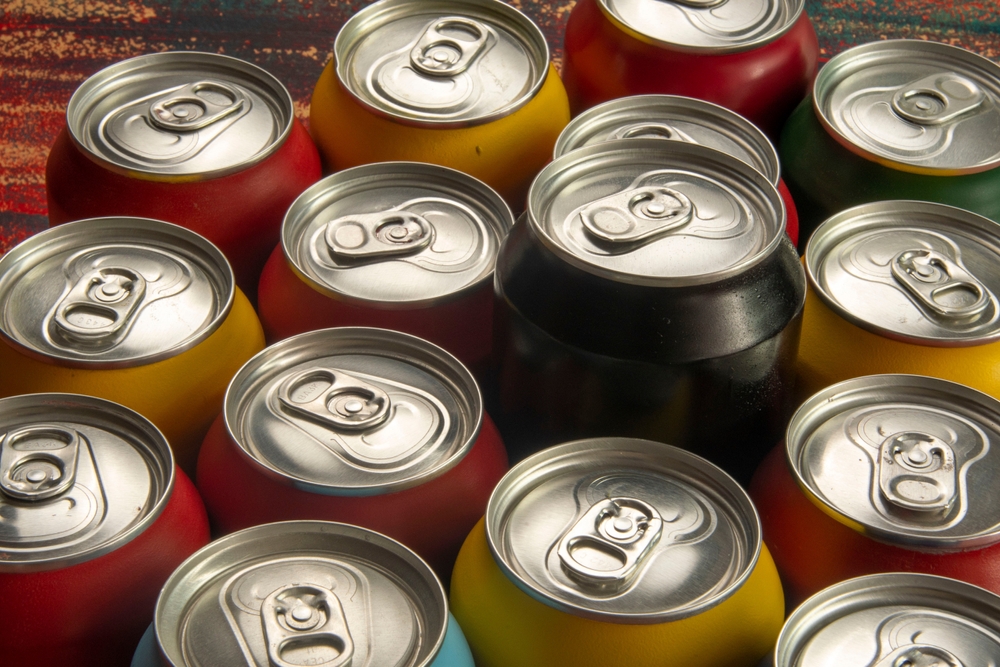
Summer’s heat has Americans reaching for cold sodas to beat the temperature.
But one major soft drink company discovered a labeling error that could put diabetics in serious danger.
And a Keurig Dr Pepper bottler’s quick action to recall thousands of cases may have just kept you out of the hospital.
FDA issues Class II recall notice for mislabeled 7Up Zero Sugar
The Food and Drug Administration issued an urgent recall notice for 7Up Zero Sugar Tropical Soda after discovering a dangerous labeling mix-up at a distribution center.¹
More than 1,950 cases of what should be sugar-free soda actually contain the full-sugar version – a potentially life-threatening mistake for diabetics who rely on accurate labeling.
Each can of the mislabeled product contains 38 grams of sugar instead of zero.
That’s enough sugar to send a diabetic’s blood glucose levels spiking into dangerous territory.
The FDA classified this as a Class II recall, meaning the product "may cause temporary or medically reversible adverse health consequences."
But for diabetics, those consequences could mean an emergency room visit.
Think about that for a second – someone managing their diabetes grabs what they think is a safe, sugar-free drink and ends up in a medical crisis because of a labeling screw-up.
How to identify the recalled products
The recalled products are easy to spot if you know what to look for.
Consumers should check for 12-ounce aluminum cans of 7Up Zero Sugar Tropical Soda sold in cardboard cartons packaging that displays UPC code 078000037982.
The affected cans have the UPC code 078000037975.
All recalled products show lot numbers XXXXBR062156 or XXXXBR062256 with a "use by" date of March 23, 2026.
If you’ve got these products in your refrigerator, don’t drink them – especially if you’re diabetic or watching your sugar intake.
Take them back to the store where you bought them for a full refund.
No questions asked, no receipt required.
When companies do the right thing
Here’s what stands out about this recall.
Buffalo Rock Company Inc., a Birmingham, Alabama-based independent bottler for Keurig Dr Pepper, didn’t try to downplay the problem or blame someone else.
They worked with the FDA to get the word out quickly and offered immediate refunds.
That’s how responsible companies handle mistakes that could hurt their customers.
Compare that to some of the corporate disasters we’ve seen where companies knew about problems for months but kept selling dangerous products anyway.
Remember the baby formula crisis that left parents scrambling to feed their children?
Or the countless times Big Tech companies covered up data breaches until they got caught?
This recall shows what it looks like when a company puts consumer safety ahead of protecting their bottom line.
The labeling mix-up happened at the distribution level – probably some rushed worker grabbed the wrong labels during a busy shift.
It’s the kind of honest mistake that can happen in any manufacturing operation.
What matters is how quickly the company responded when they discovered the error.
A brief history of America’s lemon-lime favorite
7Up has been refreshing Americans since 1929 when Charles Leiper Grigg invented what he originally called "Bib-Label Lithiated Lemon-Lime Soda."
The original formula actually contained lithium citrate – the same mood-stabilizing ingredient doctors use to treat bipolar disorder today.
Grigg thought the lithium would give his soda medicinal benefits.
Those were different times when companies could make wild health claims about their products.
The name was obviously too long for consumers, so it got shortened to 7Up.
Nobody’s entirely sure why Grigg picked that name, but it stuck.
The lithium got removed from the formula in 1948 as the FDA started cracking down on unregulated additives in food and beverages.
Today, Keurig Dr Pepper owns the 7Up brand and distributes it across the United States.
Why this matters for diabetics and health-conscious consumers
For diabetics, this recall isn’t just an inconvenience – it’s a potential medical emergency waiting to happen.
People managing Type 1 or Type 2 diabetes carefully calculate their insulin doses based on what they eat and drink.
Consuming 38 grams of unexpected sugar could send blood glucose levels dangerously high.
That can lead to diabetic ketoacidosis, a life-threatening condition that requires immediate medical attention.
Even for non-diabetics trying to watch their weight or cut sugar intake, consuming 38 grams of sugar when you thought you were drinking zero can sabotage diet goals.
That’s roughly equivalent to eating 10 teaspoons of straight sugar.
The recall affects people who specifically chose the zero-sugar option because they needed to avoid sugar for health reasons.
Nobody expects perfect manufacturing, but consumers have the right to trust that what’s on the label matches what’s in the package.
But the 7-Up bottlers stepped up and did the right thing when they discovered the mix-up.
Now it’s up to consumers to check their refrigerators and make sure they’re not sitting on any of these mislabeled products.
Better safe than sorry when it comes to your health.
¹ Evan Paul, "Nationwide 7Up Recall — Check Your Refrigerators," Taste of Country, August 22, 2025.